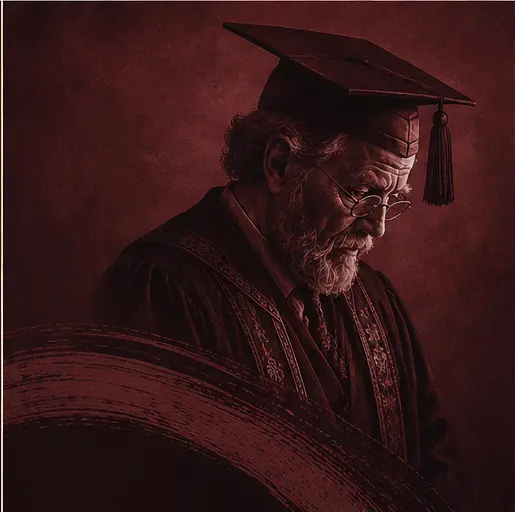
He is known for his keen ability to navigate the intricacies of student dynamics, employing wit and wisdom to illuminate the often unacknowledged truths of the artistic experience. His reflections reveal the delicate balance between encouragement and the necessity of critique, inviting students to embrace both their successes and failures as integral components of their growth. Interestingly, Conway-Hyde has become a figure shrouded in paradox. While he offers insights into the rigours of art education, he does so with an awareness of the fluid nature of identity. Through his letters, he challenges the simplistic narratives often constructed around artistic success, emphasising the importance of exploring the uncomfortable spaces where doubt, vulnerability, and creative exploration intertwine. Despite the occasional references to institutional roles, he remains an elusive presence in formal records, often appearing as a ghost within the system—more of a concept than a concrete figure. The name Conway-Hyde—perhaps a pseudonym, a collective identity, or both—serves to remind us that the boundaries of authorship in art education are as porous and multifaceted as the artistic practices themselves. In an age where artists are increasingly defined by their public personas, Conway-Hyde advocates for a deeper understanding of the processes at play in the art-making journey. His reflections invite readers to consider the complexities of their own experiences, urging them to resist easy categorisations and to embrace the ongoing dialogue of creativity. Ultimately, Andrew Léon Conway-Hyde remains a curious enigma, a voice that echoes within the corridors of artistic exploration, encouraging students and readers alike to persist in their pursuit of meaning and expression, even amid uncertainty.